SAME
WORLD.
Keeping characters, scale, rooms, vehicles and visual rules consistent across completely different images.
NOT JUST OUTPUT
A tool for designing, building, testing, solving problems and occasionally disappearing down very deep rabbit holes.
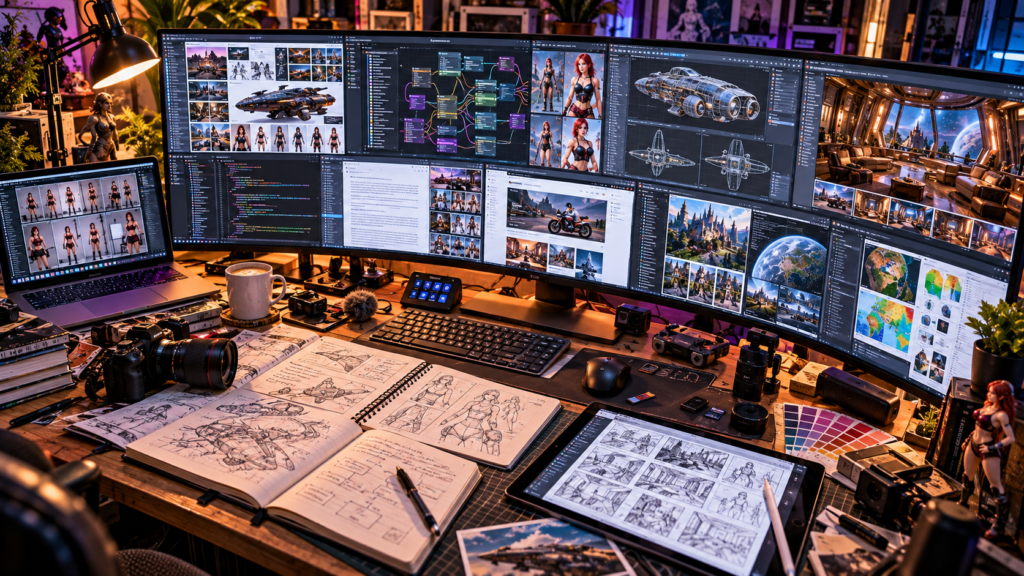
The interesting part isn't typing a sentence and getting a picture. It's working out how to make the thing in my head actually happen: researching methods, building workflows, testing, breaking things, changing tools and trying again.
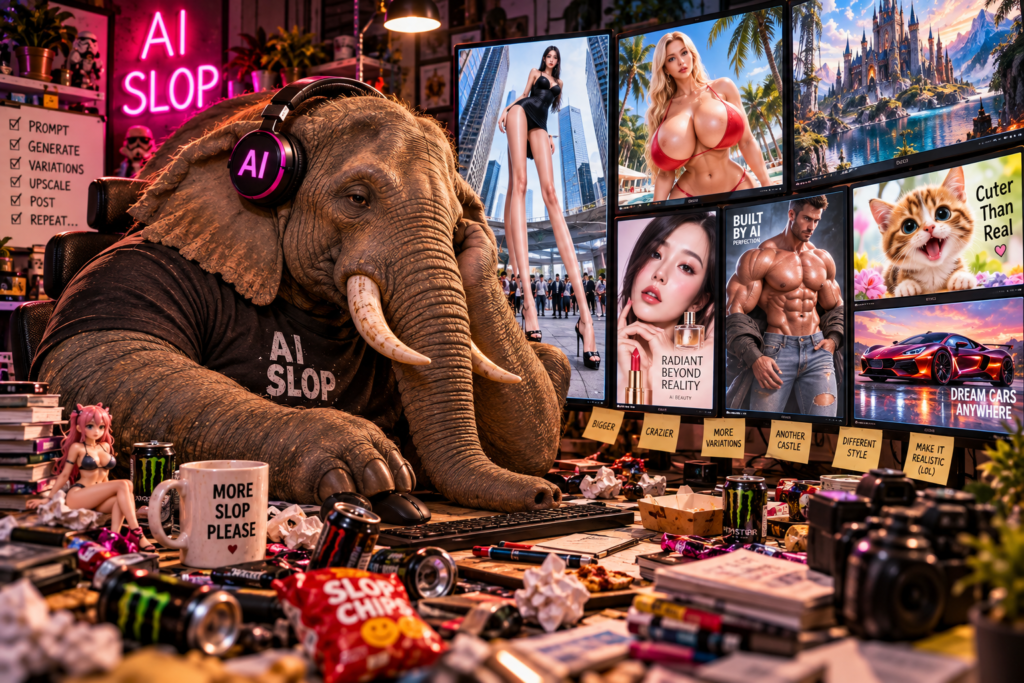
Some of the criticism is entirely justified. There's an extraordinary amount of disposable, derivative, low-effort AI content being pumped into the world.
But that's a tiny corner of what AI actually is.
For me the exciting bit is problem solving: research, prototyping, coding, workflows, testing ideas and doing things that would otherwise be impractical for one person.
INPUT / DIRECTION
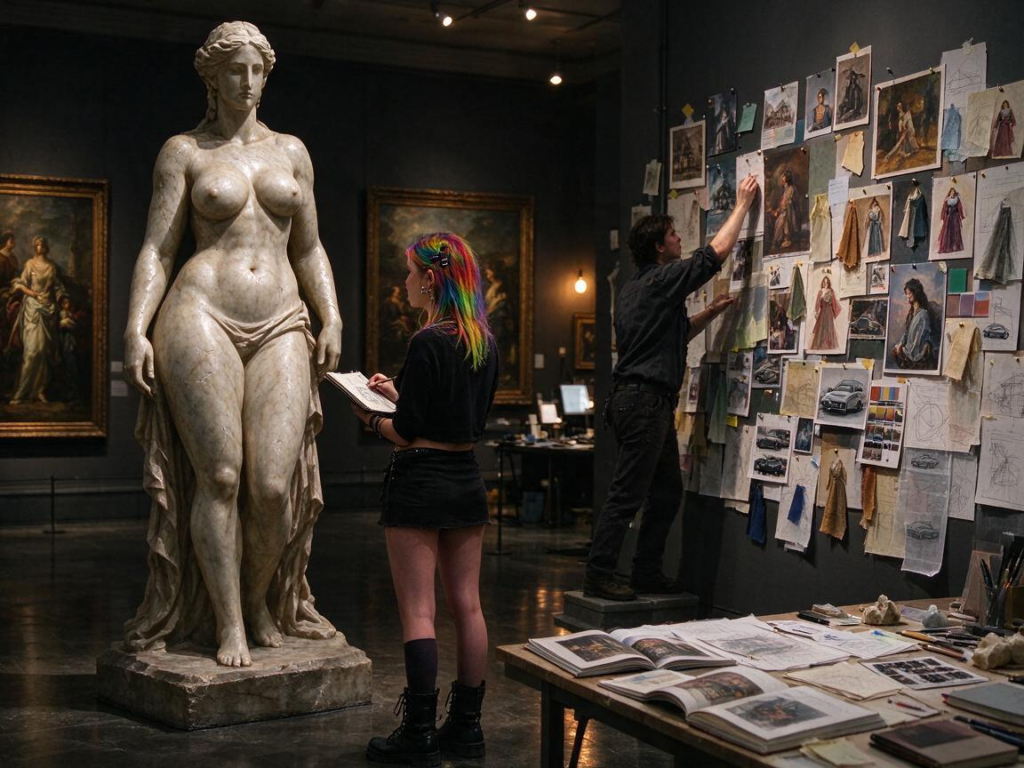
A vague request gives AI very little to work with. A detailed creative brief gives it intent, constraints and direction.
The prompt isn't a magic spell. It's a creative brief.
There are legitimate questions around AI, copyright and training data. But lazy creative direction is a different problem. Artists study art, designers collect references and photographers study technique. AI doesn't remove that responsibility.
A vague sentence leaves the system to fill the gaps. My prompts can run to pages, backed by dimensions, materials, camera positions, sketches, references, continuity rules, tests and revisions. The quality of the direction matters.
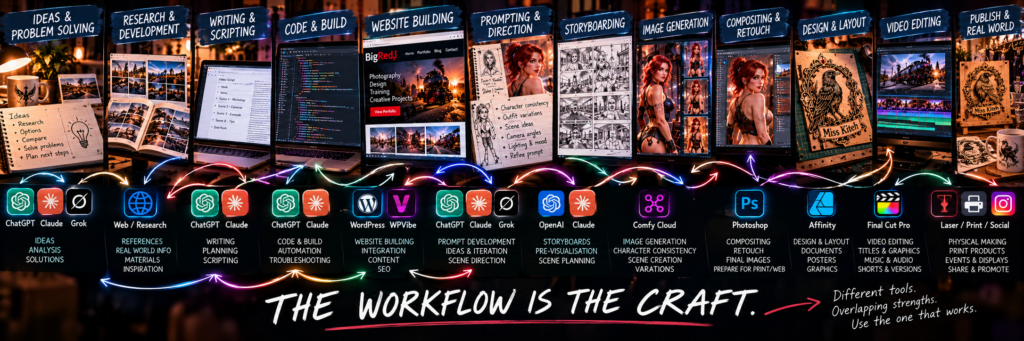
No single system does everything best. I move between ChatGPT, Claude, Grok, plugins, Cowork, Comfy Cloud, Photoshop, Affinity, Final Cut Pro, WordPress and whatever solves the next problem.
Ideas in one place. Code in another. Storyboards, image generation, compositing, layouts, video and real-world output all overlap. The skill is knowing what to use, when to switch and how to join it together.
Getting it from my head onto the page is another matter. I'm dyslexic. I can know exactly what I mean, explain it conversationally, and still struggle to turn those thoughts into a clear paragraph.
AI lets me put the thought down in my own words, badly spelt, out of order, half-finished and full of tangents, then work with it until the writing says what I meant.
The idea is mine. AI helps me get it out of my head and onto the page.
THAT HELP
IS INVALUABLE.
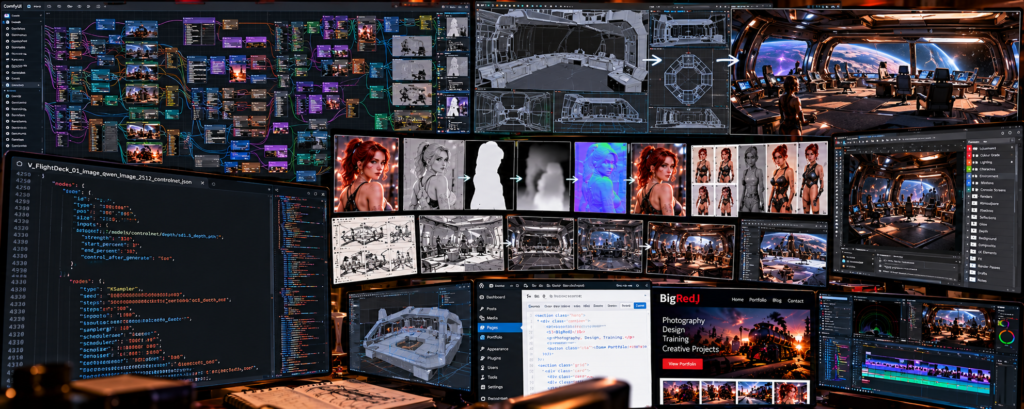
My biggest AI test bed: characters, environments, spaceships, interiors and storyboards that all have to belong to the same world. The challenge isn't making one good image. It's making the hundredth image still know what the first one looked like.
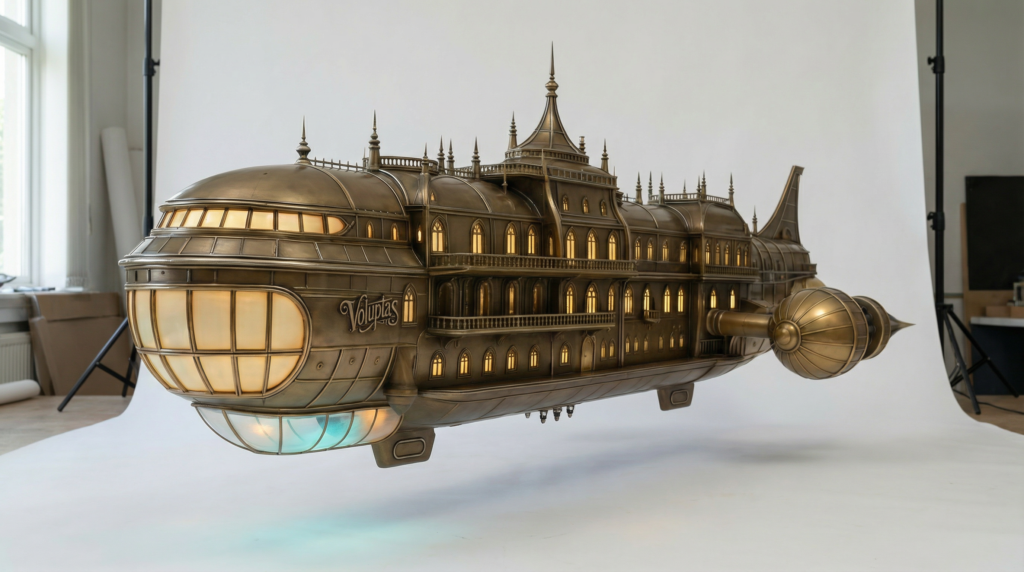
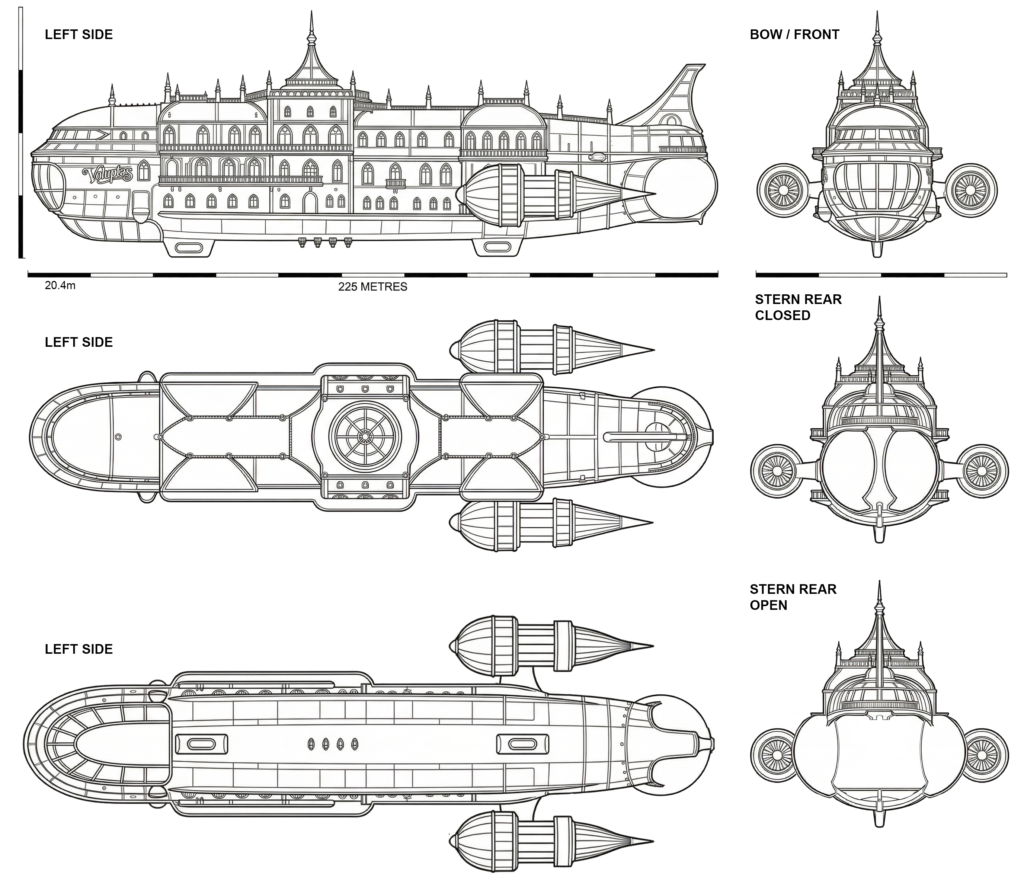
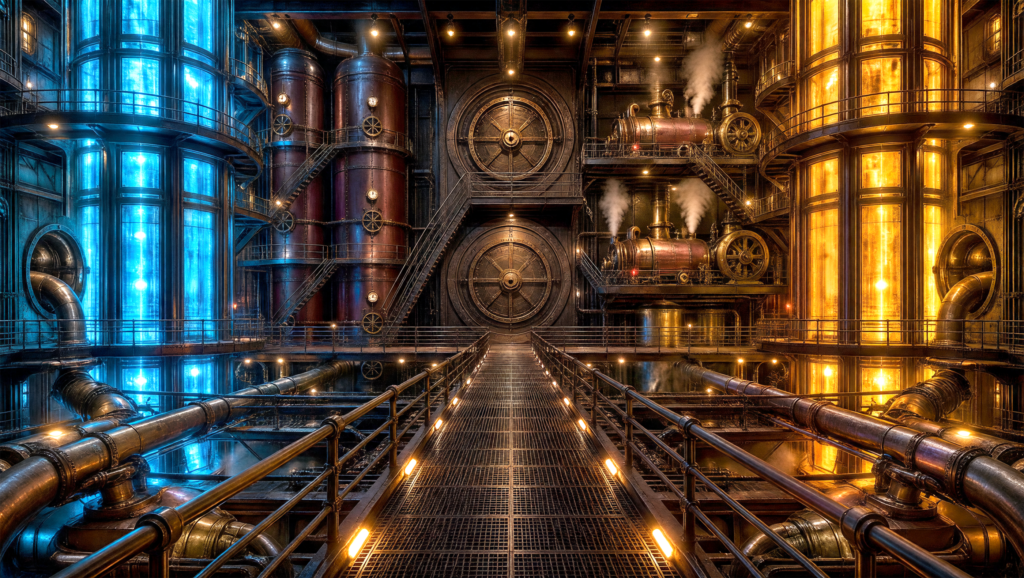
Keeping characters, scale, rooms, vehicles and visual rules consistent across completely different images.
Huge node graphs, JSON workflows, 3D blockouts, depth maps, control passes, code and compositing. The final image can be the smallest part of the job.
Most experiments don't nail it first time. The useful bit is finding out why, changing something and getting closer.
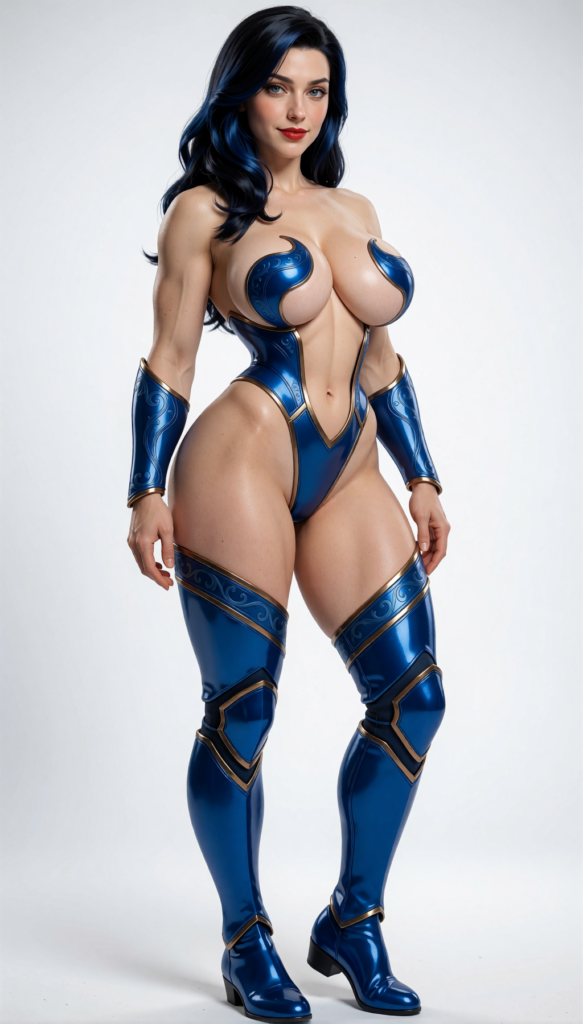
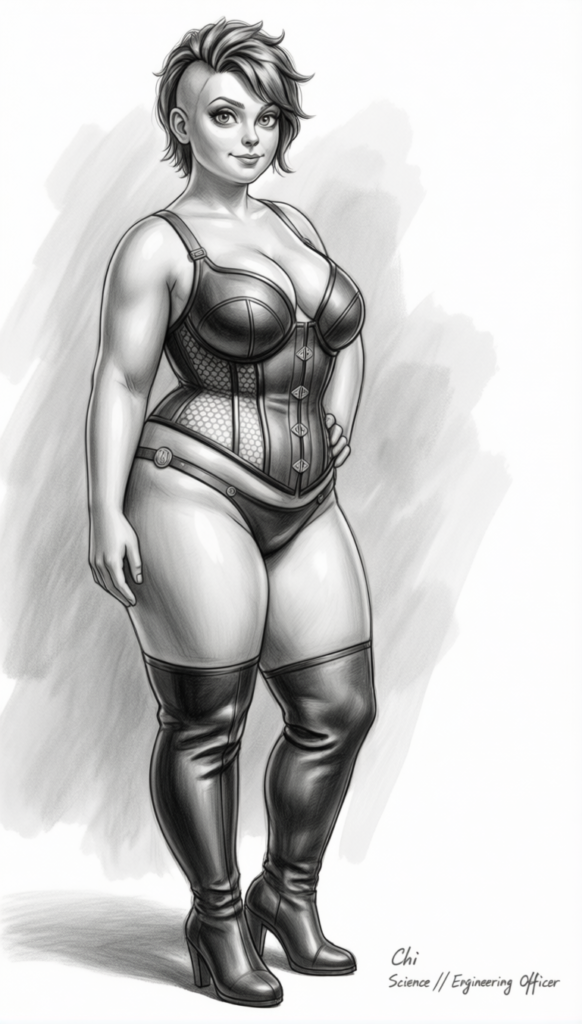
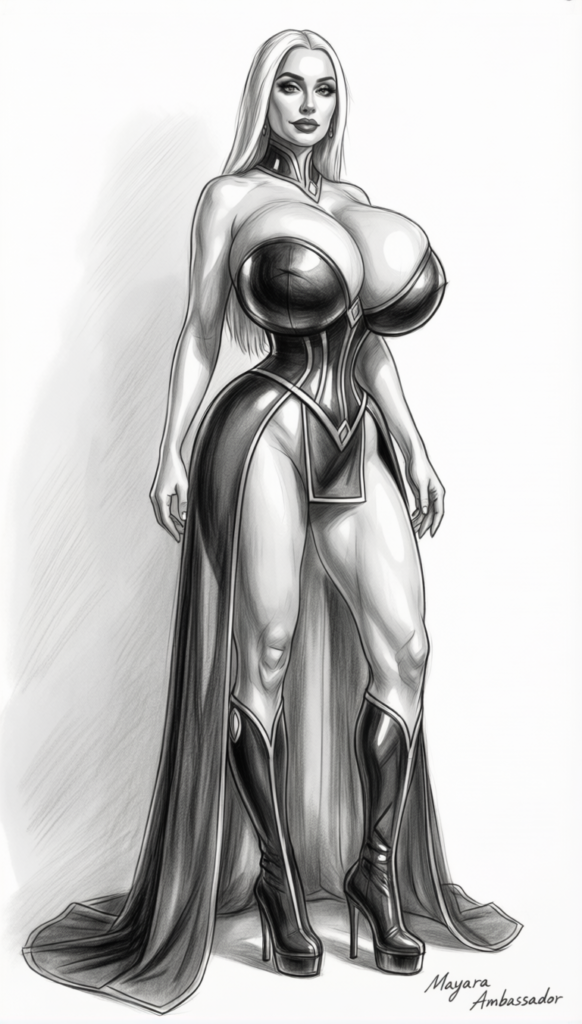
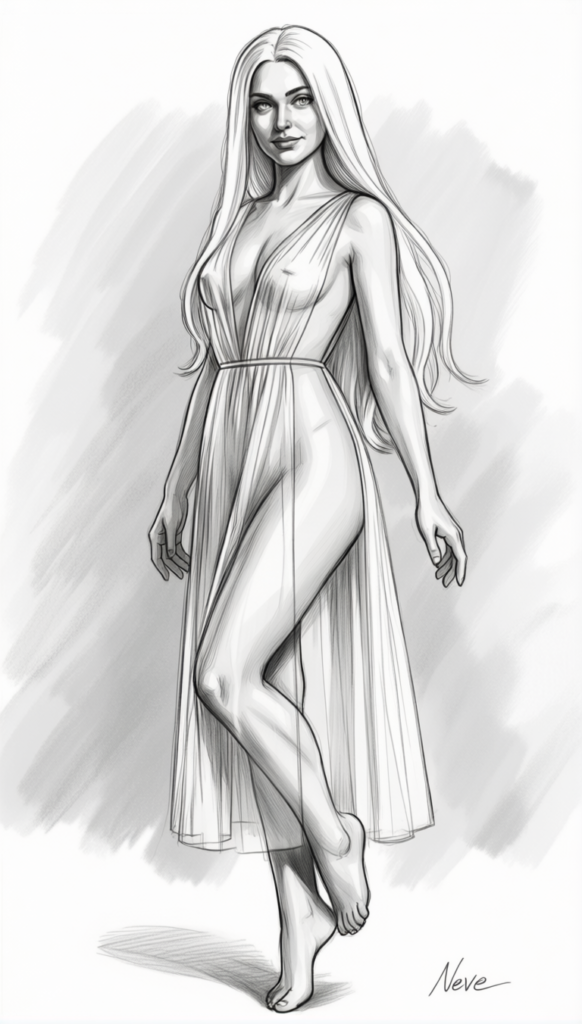
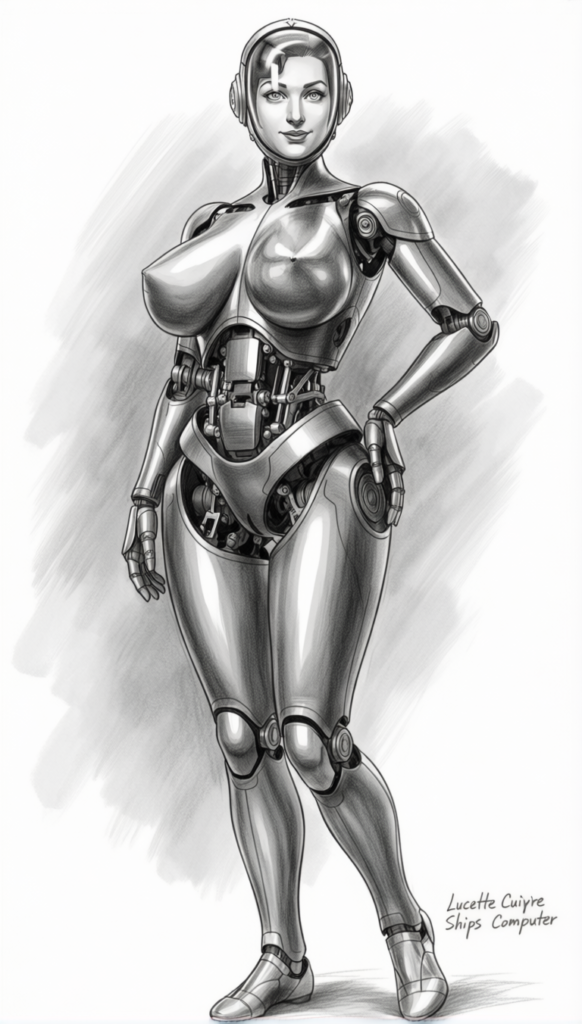
A character isn't useful because one render looks good. I want to move them, change the camera, change the scene and still recognise the same person. That's a design and systems problem, not a prompt-writing trick.
SPACE / SCALE / SOMETHING YOU CAN MOVE
AI helped me turn sketches, measurements and a pile of corrections into a spatial blockout I could actually design and render from.
Drag to explore. Use the buttons to zoom. Keyboard: arrow keys to orbit, + / − to zoom, R to reset.
Simplified web reconstruction. Approximately 25 m deep × 20 m wide × 15 m high. Figures show human scale.
THE POINT OF ALL THIS
It can replace the effort, if you let it. Ask for something, take the first answer and call it finished. That's easy. And often, that's where the slop comes from.
But use it as part of the work, with ideas, judgement, direction, experimentation and experience behind it, and it becomes something completely different.
AI CAN DO THE WORK FOR YOU.
OR IT CAN HELP YOU DO BETTER WORK.
That choice still belongs to us.